Table of Contents
ToggleOutdoor LED motion sensor lights have become a staple in modern home security and convenience. These fixtures automatically illuminate when movement is detected, eliminating the need to fumble for switches in the dark and providing an extra layer of safety around your property. Whether mounted above a garage, along a patio, or near an entryway, motion-activated lighting deters unwanted visitors, helps residents navigate driveways safely at night, and reduces energy waste by only running when needed. For DIYers, installing these lights is straightforward, most require only basic tools and a few hours of work. This guide walks you through what motion sensor lights are, why they’re worth the investment, and how to choose and install the right option for your home.
Key Takeaways
- Outdoor LED motion sensor lights combine infrared detection with energy-efficient LEDs to provide security and convenience, activating only when movement is detected and reducing electricity consumption by 50–80% annually.
- Motion-activated outdoor lighting deters intruders and property crime by surprising unwanted visitors, while eliminating the hassle of fumbling for switches during nighttime navigation.
- Choose between hardwired (permanent, reliable), solar-powered (zero installation), or battery-powered options based on your location, brightness needs (1,200–5,000 lumens), and detection range (20–40 feet).
- Mount motion sensor lights 6–10 feet high at a downward angle to detect approaching people, adjust sensitivity and duration settings mid-range initially, and keep the sensor lens clean for optimal infrared detection.
- Hardwired installation requires basic electrical work following safety protocols—turn off power, use proper outdoor-rated wiring, secure connections with wire nuts in weatherproof boxes, and consult a licensed electrician if uncertain.
What Are Outdoor LED Motion Sensor Lights?
Outdoor LED motion sensor lights are weatherproof fixtures that combine three technologies: an LED bulb or integrated light source, an infrared motion sensor, and a control circuit. When the sensor detects movement within its range, the light turns on automatically: after a set period of inactivity (usually 30 seconds to a few minutes), it dims or shuts off. Unlike traditional outdoor lighting, which runs continuously during evening hours, motion sensor lights activate only when needed, making them energy-efficient and practical.
These fixtures come in several styles, wall-mounted floodlights, compact sconces, downlights, and even spotlight-style units. The “LED” part is key: unlike older incandescent or halogen motion lights, LEDs run cooler, last longer (often 25,000–50,000 hours), and consume a fraction of the electricity. Most outdoor motion sensor lights are rated IP65 or higher, meaning they’re protected against dust and low-pressure water jets, so they’ll withstand rain, snow, and humidity without corroding or failing prematurely.
Key Benefits of Motion-Activated Outdoor Lighting
The primary benefit is security. A light that suddenly blazes when someone approaches your door or driveway surprises intruders and makes your home a less attractive target. Studies consistently show that motion-activated outdoor lighting reduces property crime, particularly burglaries and theft from vehicles.
Energy savings come second. Traditional outdoor lights burn 8–12 hours per night, every night. A motion sensor light only activates when needed, often just a few minutes per day, cutting electricity consumption by 50–80%. Over a year, a single motion sensor floodlight can save $15–30 in energy costs: multiply that across several fixtures, and the savings add up, especially in northern climates with long winters.
Convenience is often overlooked. Nobody enjoys walking to their car in pitch darkness or fumbling with keys at a dark entry. Motion sensor lights eliminate that friction, your hands are free, and you’re safely illuminated the moment you approach. For outdoor entertainment areas, they can even enhance ambiance by providing subtle background lighting that activates when guests move around the patio or deck.
How Motion Sensor Lights Work
Modern motion sensor lights rely on passive infrared (PIR) sensors, which detect heat signatures emitted by moving bodies. As a warm object (a person, animal, or vehicle) passes through the sensor’s field of view, the infrared radiation changes, triggering the light to power on.
The sensor itself contains a pyroelectric element that senses infrared radiation. When movement is detected, a small circuit compares the change in heat signature to a preset threshold. If the threshold is exceeded, the circuit sends power to the LED. You’ll typically find adjustment dials on the fixture for sensitivity (how easily the sensor triggers) and duration (how long the light stays on after the last motion is detected). Higher sensitivity picks up smaller movements or distant activity: lower sensitivity ignores minor shifts like leaves blowing or pets moving nearby.
Some advanced models include a dusk/dawn sensor or light sensor, which prevents the motion sensor from triggering during daylight, further reducing unnecessary activation and extending bulb life. A few high-end fixtures combine PIR sensors with microwave or dual-technology sensors for more accurate detection in various weather conditions, though these cost more and are overkill for most residential applications.
Choosing the Right Motion Sensor Light for Your Space
Brightness and Coverage Area
Motion sensor lights are rated in lumens, not watts. A typical single-head outdoor motion floodlight ranges from 1,200–2,000 lumens: dual-head units deliver 3,000–5,000 lumens. For reference, 1,000 lumens is roughly equivalent to a 75-watt incandescent bulb and will adequately light a driveway or small backyard. Larger areas, such as a tall garage wall or sprawling yard, benefit from 2,000+ lumens or multiple fixtures.
Coverage area depends on the sensor’s detection range and field of view, typically 180°–270° with ranges of 20–40 feet. A fixture mounted above a front door might have a 30-foot detection range: one mounted on a corner of your garage might cover a 40-foot radius. Read the product specs, don’t guess. If the light won’t detect motion far enough down your driveway, it defeats the security purpose.
Color temperature matters for aesthetics and function. Most outdoor motion lights come in 5,000–6,500K (daylight white), which is bright and clear, ideal for security. Warmer options (3,000K) suit entry doors and patios if you prefer a cozier feel. Choose based on location: daylight white for driveways and entries: warm white for entertaining areas.
Power Source Options
Outdoor motion sensor lights are available in three main power configurations:
-
Hardwired (120V AC): The gold standard for permanent installations. Hardwired fixtures plug into your home’s electrical system via a weatherproof outlet or direct wiring. They provide consistent power, don’t require battery replacement, and often cost less over time. Downside: installation requires basic electrical work and adherence to local codes (typically run through a GFCI outlet). Recommend consulting a licensed electrician if you’re unsure about running new circuits.
-
Solar-Powered: Battery-charged by a built-in photovoltaic panel during the day. No wiring needed, just mount and go. Pros include zero installation hassle and no electric bills. Cons: they’re less bright than hardwired models, perform poorly in cloudy climates, and require periodic battery replacement (every 1–3 years). Best for supplemental lighting in areas where hardwiring isn’t practical.
-
Battery-Powered (120V or wireless): Plug-in battery units with a detachable sensor, or fully wireless cordless models. Useful for temporary installations or rental properties. Battery life is typically 6–12 months with moderate use. Less reliable than hardwired for consistent, long-term security.
Installation Tips and Best Practices
Hardwired installation (the most common DIY approach):
-
Turn off power at the breaker for the outlet or circuit you’ll use. Use a non-contact voltage tester to confirm power is off. This is non-negotiable for safety.
-
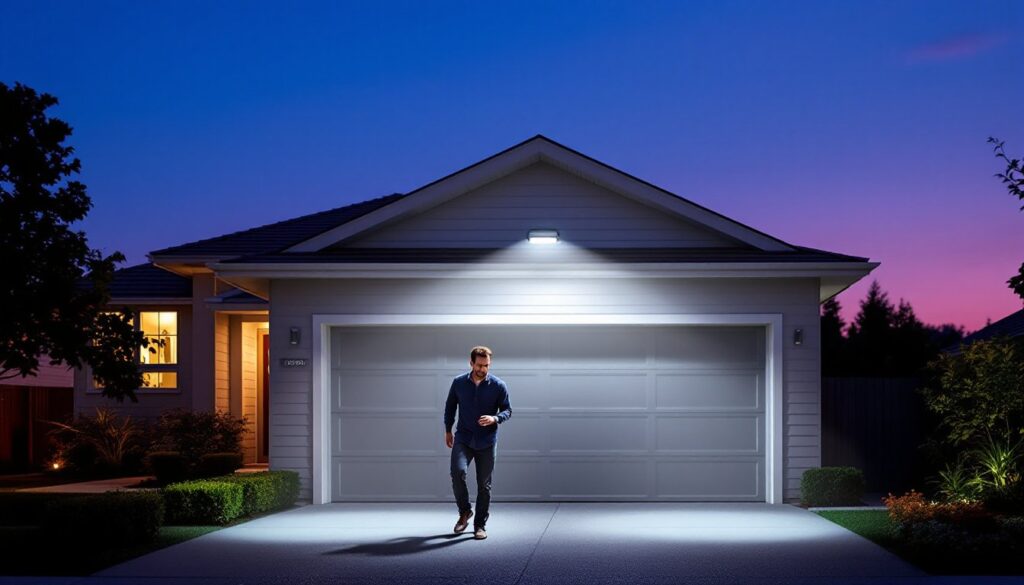
Mount the fixture using the included bracket and hardware. Position it 6–10 feet high on a wall, soffit, or overhang, high enough to detect movement across your target area, but angled downward slightly so the sensor “sees” approaching people. Use plastic anchors or lag bolts into wood studs or masonry: don’t just rely on drywall anchors in exposed outdoor locations.
-
Run the cable from your power source to the fixture. If wiring through existing conduit or walls, use appropriate outdoor-rated wire (typically 12-gauge for most fixtures). Leave 6 inches of slack for connections.
-
Wire connections: Most motion lights have three wires: black (hot), white (neutral), and green/bare copper (ground). Connect like-colors using wire nuts or terminal blocks, not twist-and-tape. Use a weatherproof junction box if connections are exposed. Double-check polarity before powering on.
-
Adjust sensitivity and duration after mounting. Set sensitivity mid-range initially: lower it if the light triggers falsely (blowing leaves, small animals). Set duration to 3–5 minutes for security applications.
General best practices:
- Test the sensor during daylight and darkness. The light should activate when you walk across its field of view and shut off after the timer expires.
- Keep the sensor lens clean, dust and spider webs block infrared detection.
- Avoid pointing the sensor at reflective surfaces (glass, water) or heat sources (vents, AC units), as these can cause false triggers.
- Place fixtures where they illuminate your target area effectively. A light mounted too high or too low will illuminate the wrong zone.
- Use weatherproof wire nuts and caulk or silicone sealant around mounting holes to prevent water intrusion.
- If you’re not confident rewiring an outlet or running new circuits, hire a licensed electrician. The cost is modest, and mistakes can be dangerous or code-violating.