Table of Contents
ToggleAn outdoor kitchen and fireplace transforms a backyard from unused yard space into a year-round entertaining hub. Today’s homeowners are investing heavily in outdoor kitchens, the outdoor kitchen market is projected to exceed $10 billion by 2027, because they want to cook, gather, and live outside without hauling food and dishes through the house. A well-designed outdoor kitchen paired with a fireplace extends the entertaining season, adds real property value, and frankly, makes life more enjoyable. Whether someone’s planning a modest grilling station with a fire pit or a full-featured outdoor kitchen with multiple cooking zones, this guide covers the essentials to plan a setup that actually gets used.
Key Takeaways
- An outdoor kitchen and fireplace transforms underused backyard space into a year-round entertaining hub that typically returns 50–70% of investment at resale.
- Essential elements to prioritize are a grill, counter space, prep area, and storage—start with these fundamentals, then add appliances like side burners or refrigerators based on budget and actual use patterns.
- Position your outdoor kitchen at least 10 feet from the house and away from combustibles per code, with proper drainage sloping away at 1/4 inch per foot to prevent water damage.
- Fireplace options range from simple wood-burning fire pits ($300–$1,500) to gas models and wood-fired ovens ($2,000–$5,000+); gas eliminates smoke and ash but costs more to operate.
- Design your layout with traffic flow and sight lines in mind—paths should be 36 inches wide minimum, fireplace zones need 3 feet of clear space, and shade structures protect both countertops and user comfort year-round.
Why Invest in an Outdoor Kitchen and Fireplace
An outdoor kitchen is a functional extension of the home, not a luxury toy. It keeps heat and mess outside during summer, eliminates constant trips between indoor and outdoor spaces, and makes entertaining larger groups practical. Families with teenagers or those who host frequently find they recoup the investment through years of everyday use.
A fireplace, whether a traditional fireplace, fire pit, or chiminea, serves triple duty: cooking surface, heat source, and gathering point. Evening temperatures drop faster than most people expect, especially in spring and fall. A fireplace makes shoulder-season entertaining comfortable and extends the entertaining calendar by months.
Resale value matters too. Real estate data shows outdoor kitchen improvements typically return 50–70% of their cost at sale, and in competitive markets, they differentiate a property. Even modest upgrades signal a well-maintained home.
Essential Elements of an Outdoor Kitchen
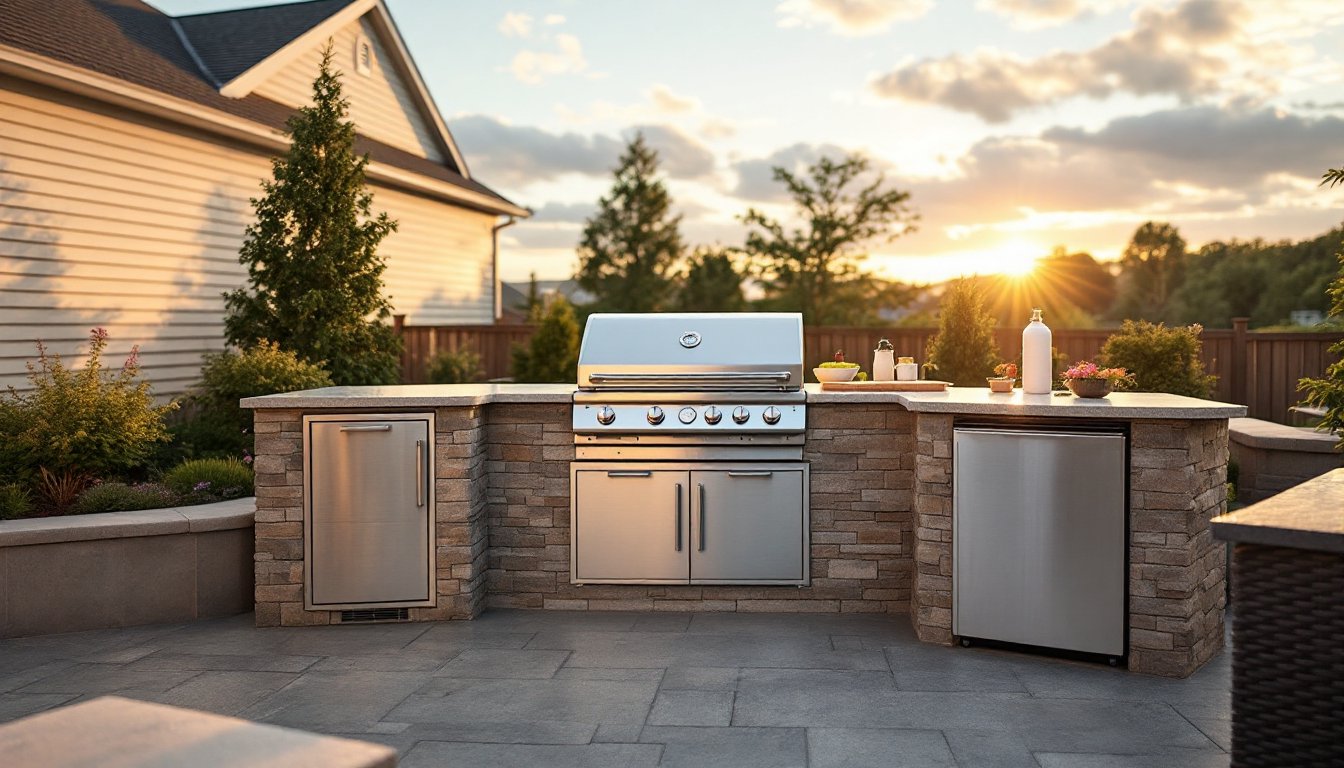
A functional outdoor kitchen doesn’t need to include every appliance. Start with the essentials: a grill, counter space, prep area, and storage, then add based on budget and use patterns.
The grill is the anchor. A built-in gas or charcoal grill runs $1,500–$5,000+ depending on size and features: a high-end professional model costs more. For occasional use, a good quality portable grill ($300–$800) is honest and practical. Position the grill away from the house and overhanging structures, minimum 10 feet from the house siding and away from combustibles per NEC standards, though always check local building codes.
Counter space should be weather-resistant. Stainless steel, granite, or sealed concrete each have tradeoffs. Stainless steel stands up to salt spray and moisture but shows fingerprints and doesn’t retain heat. Granite is durable and heat-resistant but porous and expensive. Sealed concrete is affordable and can be scored for a custom look, but requires regular sealing (every 1–3 years). Plan at least 3 linear feet of counter space flanking the grill, one side for prep, one for plating.
Storage matters: weatherproof cabinetry keeps tools, seasonings, and serving dishes dry. Avoid particle board: marine-grade plywood or stainless steel shelving resists rot. Budget $1,000–$3,000 for decent built-in storage.
Cooking Appliances and Countertops
Beyond the grill, a side burner ($200–$600) doubles meal options, simmer sauces, cook vegetables, or boil pasta without firing up the main grill. A built-in refrigerator ($800–$2,000) keeps drinks cold and ingredients fresh. A pizza oven or smoker ($1,500–$5,000+) signals serious cooking ambitions but requires dedicated space.
Countertop material selection affects long-term maintenance. Granite is beautiful but requires professional installation and periodic sealing. Stainless steel is cleanable but shows every water spot. Sealed concrete is DIY-friendly and forgiving: use concrete overlay kits or hire a concrete contractor to apply a sealed finish. For a weathered look that hides dirt better, brushed stainless or acid-washed stainless is less fussy than polished.
Cover your countertop area with a retractable shade structure or pergola to protect it from direct sun and rain. UV exposure fades everything and exposes bare wood or sealant to damage.
Fireplace Options for Outdoor Spaces
Fireplace choice depends on available space, fuel type preference, and code restrictions. Some municipalities restrict open fires: others require permits or setback distances. Check local fire codes before purchasing anything.
Choosing Between Fire Pits, Fireplaces, and Chimineas
A wood-burning fire pit is the simplest entry: a ring of stone or metal with a grate. Cost runs $300–$1,500 depending on materials and size. Site it 10–15 feet from structures and overhanging trees: keep a fire extinguisher nearby. A good fire pit draws smoke away from seating and provides gentle warmth for 8–10 people. Downside: wood smoke drifts into clothing and hair, and ash cleanup is daily work during fire season.
A gas fire pit or outdoor fireplace eliminates smoke and ash. Propane-fueled models cost $1,500–$4,000: natural gas versions require a dedicated line from the house (often $500–$1,500 to run). Gas burns cleaner and hotter, keeping people warm at greater distances. The tradeoff is less ambiance than wood, and you’ll pay for fuel.
A chiminea is a freestanding, wood-burning stove shaped like a beehive. It costs $300–$1,500 and occupies minimal space, making it ideal for small patios. Heat is concentrated directly in front, so seating is limited to 4–6 people. Chimineas do produce smoke and require a clear landing area below the opening, sparks do escape.
Electric fire features (tabletop or built-in) are virtually maintenance-free but deliver no real heat. Use them for ambiance only, not supplemental warmth.
For serious cooking and frequent entertaining, a wood-fired oven is unmatched but demands the most: space, permits, installation cost ($2,000–$5,000+), and ongoing wood supply. A pizza or bread oven reaches 600–900°F and cooks food fast, but requires a dedicated base (concrete pad, brick foundation) and a chimney to vent smoke.
Design and Layout Considerations
Layout starts with the sun and wind. Position the grill and counter where morning or afternoon sun won’t bake users: a north-facing orientation works in hot climates. In cooler regions, south-facing is better for natural warmth. Check prevailing wind direction: smoke and heat should drift away from the house and neighboring properties.
Circulation and sight lines matter more than most homeowners think. Path widths should accommodate two people walking side-by-side (minimum 36 inches) and wheelbarrels if anyone gardens or entertains regularly. Position the fireplace so guests can walk around it safely: a 3-foot minimum clear distance on all sides prevents burns and tripping. Don’t back guests into doors, stairs, or garden edging.
Utilities and hardscape set the stage. Natural gas and propane lines require a licensed installer and permits in most jurisdictions. Electrical service for a side burner, refrigerator, or lighting requires a dedicated circuit, plan for 20 amps minimum: a licensed electrician should run this, not a DIYer. Drainage is easy to forget: ensure the patio slopes away from the house at 1/4 inch per foot to prevent standing water and wood rot.
Seating zones should cluster around the fireplace and grill but remain distinct. A lounge area with Adirondacks near the fireplace feels separate from a dining island near the kitchen. This layering makes 600 square feet feel spacious and functional.
Shade and lighting extend usability. A pergola, shade sail, or retractable awning keeps the kitchen cooler and protects countertops. For evenings, plan outdoor-rated LED string lights, uplighting on the fireplace, or recessed lighting along walkways. Use 3000K color temperature (warm white) to keep the vibe intimate.
Material choices should weather together. If the grill surround is stainless steel, choose stainless or matching stone for the fireplace surround. Mismatched metal finishes and materials look scattered.
Conclusion
Building an outdoor kitchen and fireplace is as much about lifestyle as it is construction. Start with a clear picture of how the space will be used, frequent entertaining, daily family meals, or weekend projects. Invest in the core elements first (grill, counter, fireplace), then build out seasonally based on what gets used. A solid plan, honest assessment of DIY vs. professional work, and attention to drainage and utilities prevent costly mistakes. The payoff is a backyard that becomes the heart of home life, not just yard decoration.