Table of Contents
ToggleA Napoleon outdoor kitchen transforms the backyard from a forgotten corner into an entertainment destination where serious cooking happens. Whether it’s a weekend grilling session or a full dinner party prep, a well-designed outdoor kitchen system handles it all, and Napoleon’s lineup of modular grills and coordinated components makes it accessible to DIY homeowners ready to invest in their space. The right configuration combines durability, cooking performance, and smart design without requiring contractor installation for most systems.
Key Takeaways
- A Napoleon outdoor kitchen’s modular design lets homeowners start with a core grill and add components like side burners, rotisseries, and prep tables as budget and space allow.
- Napoleon grills use stainless steel and cast iron construction for durability, even heat distribution, and reliable ignition systems that handle years of weekly residential use.
- Grill-focused configurations cost $2,500–$4,500 for popular Prestige or Phantom series models, while comprehensive kitchen islands range from $4,000–$8,000+ in materials.
- A proper 4-inch concrete foundation, correct gas line routing, and 10-foot setbacks from structures are essential for safe installation and even cooking performance.
- Consistent maintenance—brushing grids after each use, inspecting burners annually, and using proper winter covers—can significantly extend your Napoleon outdoor kitchen’s lifespan.
- Choosing propane fuel simplifies DIY installation by avoiding gas line permits and trenching costs, though natural gas provides a permanent fuel source if you’re willing to work with licensed technicians.
Why Choose a Napoleon Outdoor Kitchen System
Napoleon grills have earned a solid reputation for even heat distribution and reliable ignition systems, two things that separate casual weekend burners from actual cooking tools. Their outdoor kitchen modular systems let homeowners start with a core grill and layer in complementary components: side burners, griddle tops, rotisseries, and dedicated prep tables. This flexibility means you’re not locked into a single massive build: you can expand as budget and space allow.
The engineering matters here. Napoleon units use stainless steel and cast iron construction to handle weather exposure and high-heat cycling without premature rust. Their control valves and burner systems are designed for residential use, so parts and repair support are straightforward, no hunting down specialty contractors for routine maintenance. For homeowners who want a grill that cooks as well outdoors as a kitchen range does indoors, this approach delivers consistent results.
Popular Napoleon Outdoor Kitchen Models and Features
Grill-Focused Configurations
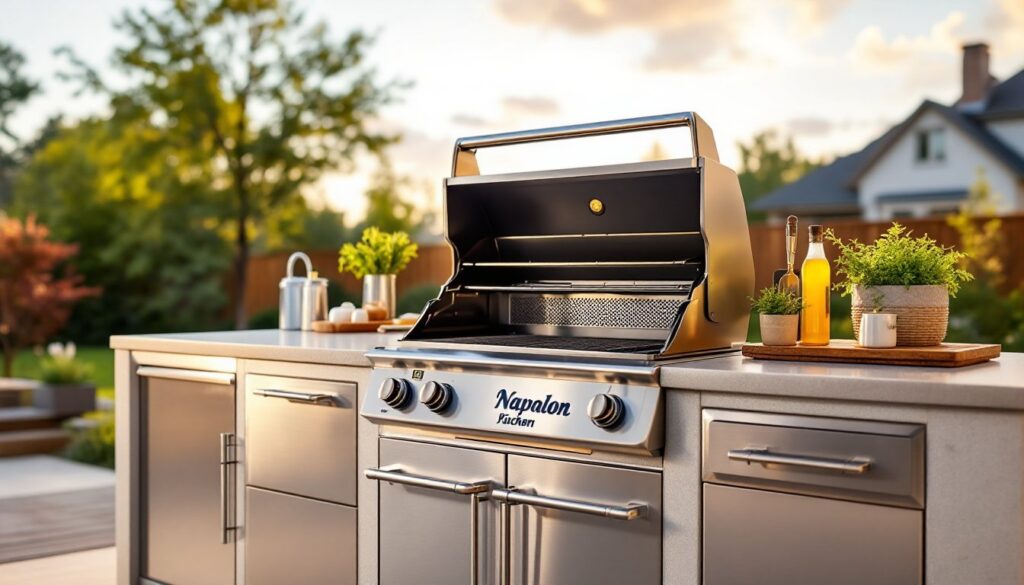
Many homeowners start with a Napoleon Prestige or Phantom series grill as the centerpiece, these are freestanding or built-in units ranging from 500 to 750+ square inches of cooking surface. The Prestige line emphasizes versatility with multiple burners (typically four to six main burners plus side options), infrared back burner for rotisserie work, and precise temperature control. Cast iron cooking grids and stainless steel firebox mean these grills handle years of weekly use. A typical Prestige setup costs $2,500–$4,500 depending on size and fuel type (propane or natural gas).
For those building primarily around grilling, adding a side burner and prep surface alongside the main unit creates a functional three-zone layout: searing zone, holding zone, and plating area. This is a smart move if your space is tight but your cooking ambitions are high.
Comprehensive Kitchen Islands
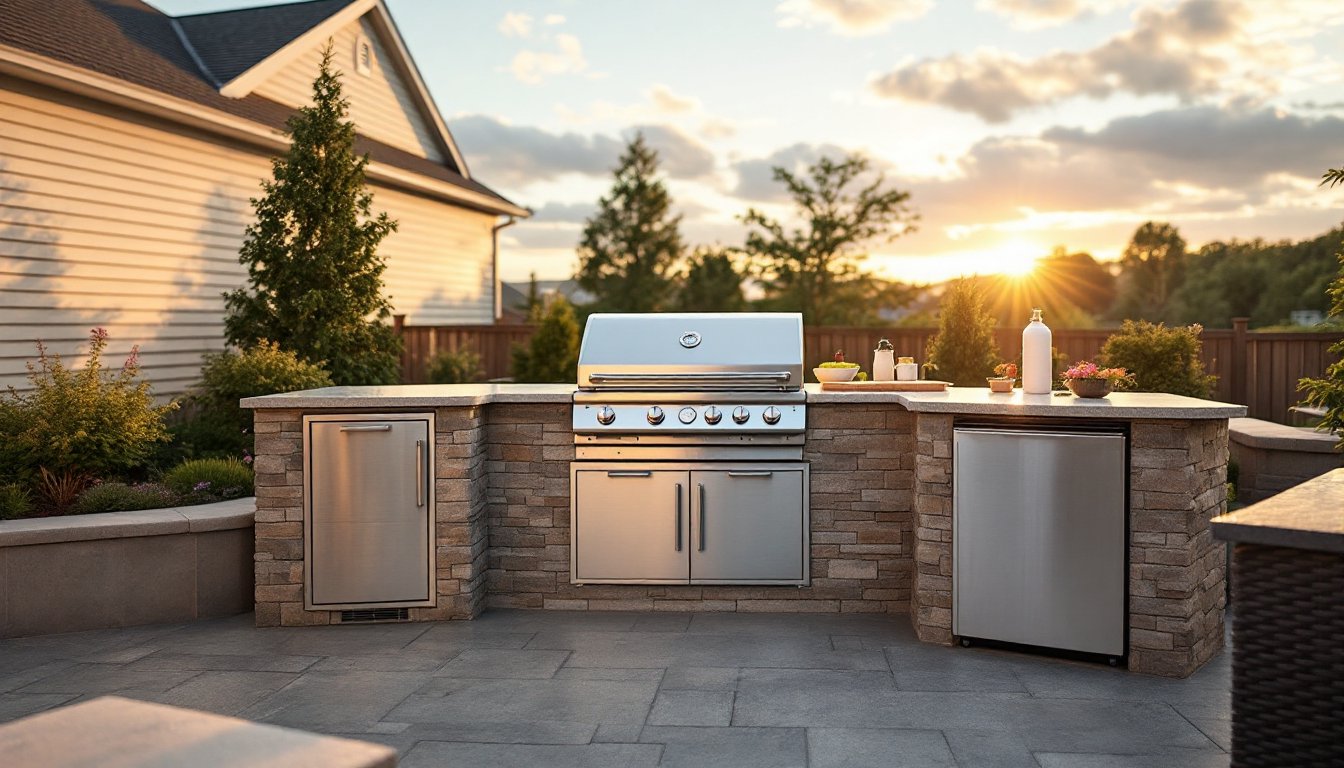
Full Napoleon outdoor kitchen islands integrate a grill, side burners, refrigeration, storage, and countertop space into a built-in structure. These are assembled on-site and typically require foundation work, rough plumbing for gas lines, and electrical for any refrigeration or lighting. Island builds run $4,000–$8,000+ in materials alone, excluding labor if you’re hiring for masonry or concrete finishing.
A modular island approach, where Napoleon components bolt into a prebuilt frame, is more DIY-friendly. Manufacturers like Napoleon partner with cabinet and island makers to offer integrated systems that reduce custom fitting and get you grilling faster. These systems still demand level concrete pad prep and accurate gas/electrical roughing-in before assembly, but the guesswork drops significantly.
Design and Installation Considerations
Start with a solid, level foundation. A 4-inch concrete pad is the industry standard for freestanding units, a sloped surface causes uneven heat distribution and water pooling. If you’re building an island, that pad needs to be reinforced for weight: consult local building codes for specifications in your area, as frost-line depth varies. In colder regions, some builders recommend a gravel base below concrete to manage freeze-thaw cycles.
Gas line routing depends on fuel type. Natural gas requires trenching to your home’s existing gas meter (typically requires a licensed technician and municipal permits). Propane lines stay localized, just run a regulator-equipped hose from a tank stationed nearby. Many DIYers choose propane to avoid permitting headaches and the cost of a gas line install, though you’ll need regular tank swaps.
Ventilation matters if your kitchen is near the house or under a covered porch. Napoleon grills produce significant heat and moisture: without airflow, that draws into your home or creates a sauna effect. Position your grill at least 10 feet from structures or soffits if unventilated, or install a hood and proper ducting if you’re tucking it under an overhang. Check your local fire code, setback rules vary.
Electrical work for lights, outlets, or refrigeration should be trenched underground in a schedule 40 PVC conduit below frost line and routed from a GFCI-protected circuit. If this feels outside your skill level, bring in a licensed electrician: buried electrical is not a good place to learn on the job.
Maintenance and Durability
A Napoleon grill’s lifespan depends on consistent maintenance. After each cook, brush the cast iron grids with a stiff brush while they’re warm to clear food and ash, this prevents rust and ensures even heat next time. End-of-season prep means disconnecting the fuel source, covering the grill, and wiping down stainless steel with a microfiber cloth.
Inspect your burners annually. Gas holes can clog with spider webs or debris: a thin wire or compressed air clears them. Check ignition batteries (typically AA), and look for rust forming on any unprotected cast components, a light coat of food-grade mineral oil stops progression. Thermometer calibration drifts over time, so if your grill’s built-in dial seems off, verify with a separate oven thermometer.
Stainless steel looks good but isn’t invincible. Salt air and acidic cleaners accelerate pitting, so rinse after coastal use and stick to mild soap or stainless-specific cleaners. Avoid steel wool on the exterior, it leaves behind particles that rust. A few years in, you may replace burner tubes or valve seats: Napoleon stocks these parts and they’re straightforward swaps for anyone comfortable with basic tools.
Proper winter storage or covering extends grill life significantly, especially in freeze-thaw zones. A fitted cover protects against moisture accumulation, but don’t seal it completely, condensation needs an escape route. For long-term storage, drain propane and natural gas lines fully to prevent valve freeze-up.
Conclusion
A Napoleon outdoor kitchen brings reliable, restaurant-quality cooking to your backyard without the contractor markup if you handle assembly and foundation work yourself. Whether you start simple with a core grill or jump into a full island build, the modular design lets you scale to your space and budget. Get the foundation and gas rough-in right, respect setback codes, and maintain consistently, and you’ll have a functioning outdoor cooking space that performs for years.