Table of Contents
ToggleAn outdoor kitchen set transforms a backyard from a blank slate into a functional, entertaining hub. Whether someone is grilling steaks for friends or prepping meals outside on a summer evening, the right outdoor kitchen setup makes the difference between a weekend hassle and genuine enjoyment. Today’s outdoor kitchen sets range from simple modular units to elaborate built-in suites, and finding the fit depends on space, climate, cooking style, and budget. This guide walks through what to look for, the main types available, and how to keep equipment in top shape so a backyard kitchen lasts for years.
Key Takeaways
- Outdoor kitchen sets come in three main types—modular carts ($300–$1,200), freestanding islands ($800–$3,000), and built-in systems ($2,500+)—each suited to different budgets and permanence levels.
- Stainless steel (304-grade or higher) is essential for durability against rust and corrosion, while cabinet frames should be aluminum or stainless to prevent rot and water damage.
- Proper sizing and workflow planning—measuring space carefully and allowing at least 3 feet of walkway on sides—are crucial to avoid a cramped, uncomfortable outdoor kitchen setup.
- Mid-range outdoor kitchen sets ($600–$2,000) offer the best value, delivering better materials and longevity (7–10 years) compared to budget options that rarely last beyond 3–5 years.
- Regular maintenance including post-use grate cleaning, seasonal stainless steel conditioning, and end-of-season covers significantly extends equipment lifespan and prevents costly repairs.
- Budget for hidden costs like concrete pads, gas line installation, electrical work, permits, and seasonal covers—these can add $500 to several thousand dollars beyond the initial purchase price.
What Are Outdoor Kitchen Sets?
An outdoor kitchen set is a collection of cooking and prep equipment designed to function outside, typically arranged in a modular or integrated layout. At minimum, this includes a grill, the centerpiece, along with storage, countertop space, and sometimes a sink or mini fridge. The term “set” distinguishes these from standalone grills: a set bundles complementary pieces that fit together visually and functionally.
Outdoor kitchen sets fall into two categories: modular (separate pieces that sit side by side, easier to move and reconfigure) and built-in (custom or semi-custom installations anchored to a patio or deck). Modular units are popular with renters and those uncertain about permanent placement, while built-in setups suit homeowners committed to a specific layout. Most sets include a grill, side burner or warming station, storage cabinets with weather-resistant interiors, and stainless steel or aluminum countertops. Some also incorporate beverage coolers, pizza ovens, or rotisseries, though these often sell separately.
Key Features to Look For
Materials and Durability
Outdoor kitchen components face sun, rain, salt air, and temperature swings. Stainless steel is the go-to for grill bodies, countertops, and cabinet frames because it resists rust and cleans easily. Grade matters: 304-grade stainless steel handles most climates well, while 316-grade stands up to coastal saltwater exposure. Avoid 430-grade or “stainless-look” painted steel, they corrode fast.
Cabinet frames should be aluminum or stainless: wood bases rot outdoors, even when sealed. Check that drawer slides, hinges, and latch hardware are also stainless or powder-coated to prevent rust. Countertops come in granite, engineered stone, or concrete, all solid choices if sealed yearly. Avoid unsealed wood or tile on prep surfaces: they absorb moisture and crack in freeze-thaw cycles. The grill’s cooking grates should be cast iron (season like indoor cookware), stainless steel (no seasoning, good heat retention), or porcelain-coated steel (easy cleanup, but can chip).
Size and Layout
Measure the intended location carefully. A typical modular set runs 4 to 8 feet wide, with 24 to 36 inches of depth. Cramped spaces benefit from L-shaped or U-shaped layouts, which maximize counter and storage without sprawling across the yard. A solo griller may be fine with a 3-burner grill and a small side cart, while a household that entertains often needs 30-plus inches of grill width and at least 15 linear feet of counter space (including storage shelves).
Consider workflow: place the grill away from the door (avoid heat and smoke drifting indoors), the sink or cooler near prep areas, and garbage/compost convenient to the grill. Tight spacing looks good in photos but gets cramped during use. Leave at least 3 feet of walkway on the sides and 2 feet behind for comfortable movement during cooking.
Types of Outdoor Kitchen Sets
Modular cart systems are the most accessible entry point. These roll on casters or sit on a wheeled frame and typically include a grill, side shelf, and small storage base. Prices run $300 to $1,200. They’re rearrangeable and move with a user if they relocate. The tradeoff: limited counter and storage space, and some designs feel flimsy under heavy use.
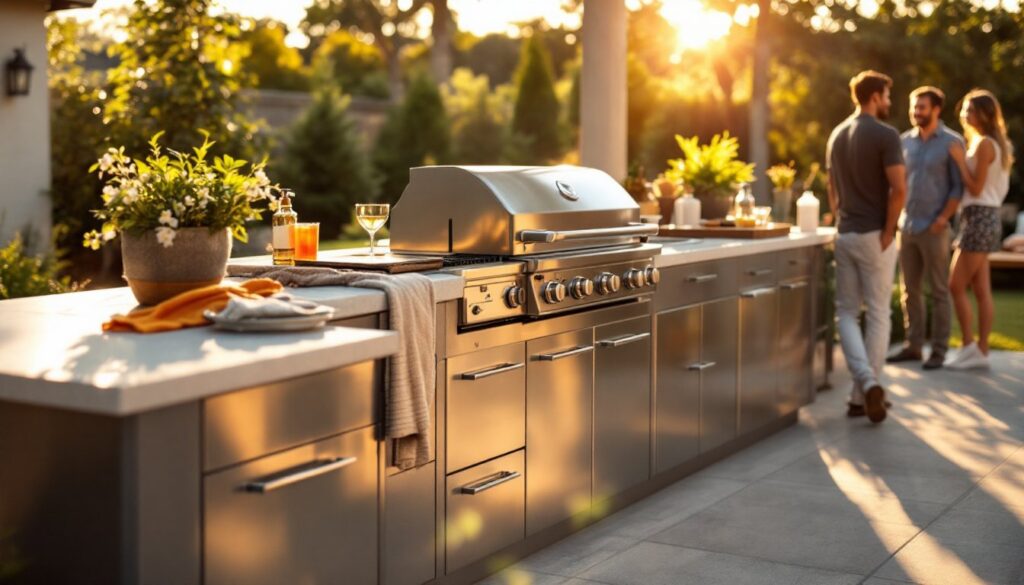
Freestanding island sets anchor to a patio without bolting down. These are larger (often 4 to 6 feet wide) and combine a grill, wraparound countertops, and cabinetry. Many include a side burner and storage cabinets. Expect $800 to $3,000 depending on material quality and whether extras like a rotisserie or beverage center are included. They feel more permanent and functional than carts but can be repositioned if needed.
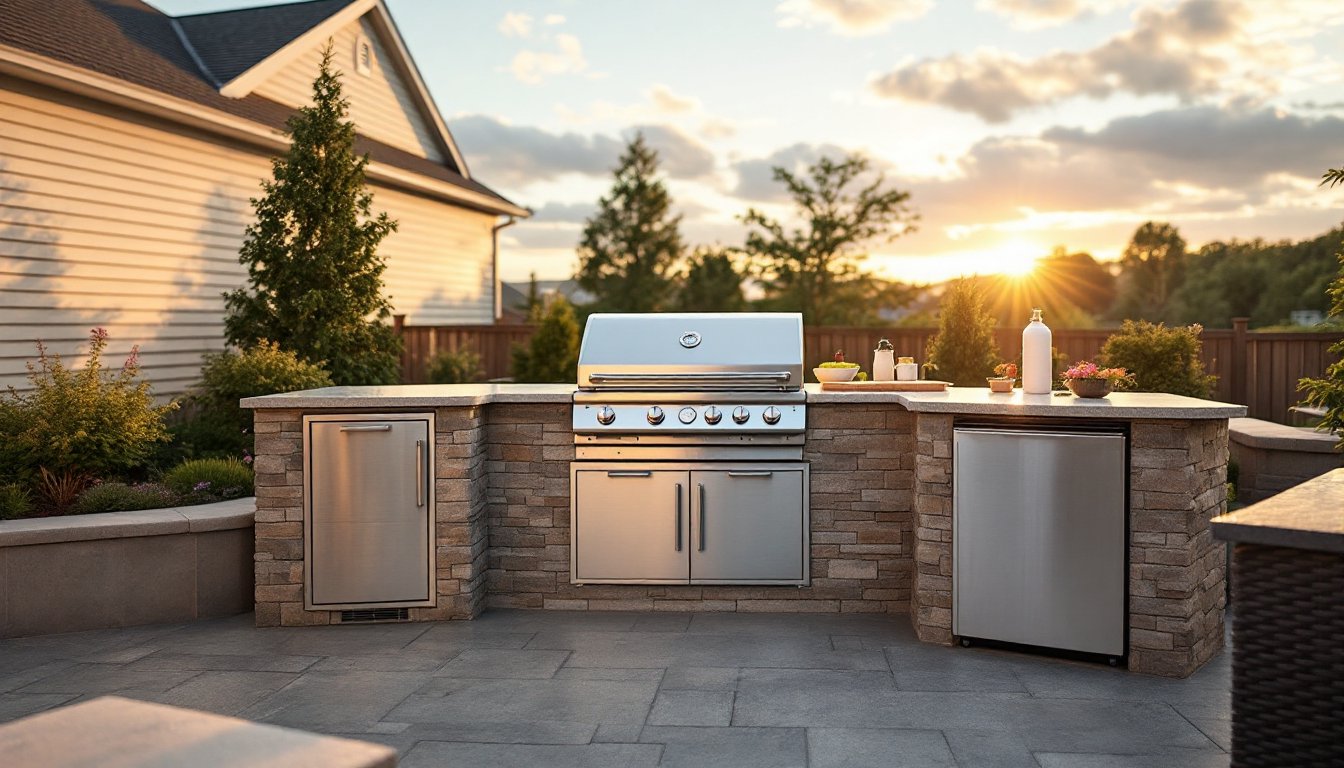
Built-in or semi-custom systems are anchored structures, sometimes incorporating brick, stone, or cedar frames with stainless steel inserts. A contractor typically handles installation, and costs range from $2,500 to $10,000 or more. This option suits dedicated outdoor spaces and homeowners planning to stay put. The payoff: a professional appearance, tailored layout, and long-term durability if built correctly.
Prefab outdoor kitchen kits (sold by manufacturers like Lynx, Fire Magic, and others) split the difference, they’re modular but designed as a cohesive unit with matching finishes and integrated utilities. Pricing falls between carts and custom builds, around $1,500 to $4,000, and most require minimal assembly.
Budget Considerations
Entry-level outdoor kitchen sets ($200–$600) are usually compact cart systems with basic grills. They work for small patios or occasional use but rarely last beyond 3 to 5 years if left outside year-round. Mid-range sets ($600–$2,000) offer better materials, more counter space, and reputable brands. These typically survive 7 to 10 years with basic care.
Premium sets ($2,000 and up) use heavier gauge stainless steel, commercial-grade components, and often come with longer warranties (10 years or more). If someone plans to use an outdoor kitchen frequently and keep it for a decade-plus, that investment usually pays for itself in durability and reduced repair costs.
Hidden costs to budget for: a concrete pad or deck reinforcement (if not already in place), gas line installation (if converting from propane), electrical for lights and appliances, and shipping for large units (can be $200–$500). Permits may be required for gas hookups or structural additions, depending on local codes. Seasonal covers ($50–$200) and annual maintenance supplies (sealer, replacement grates, etc.) add up over time. Most regions also see regional pricing variation, coastal areas typically cost more due to shipping and demand.
Maintenance and Care Tips
Seasonal prep is critical. Before the season starts, wipe down all stainless surfaces with a microfiber cloth and apply a light coat of stainless steel conditioner to repel fingerprints and moisture. Check that all screws, bolts, and hinges are tight (vibration and weather movement loosen them). Inspect gaskets on doors and lids for cracks: replace them if they don’t seal.
After each use, scrape grill grates with a grill brush to prevent rust and buildup. If the grill has a grease trap, empty it regularly. Wipe down the exterior with a damp cloth, and dry it immediately to prevent water spots and salt corrosion (especially in coastal climates). Never use abrasive cleaners or steel wool on stainless steel, they scratch the finish and create rust nucleation points.
End-of-season care: Clean and dry everything thoroughly. If the set has a propane tank, disconnect it and store it separately in a cool, dry location. If leaving the kitchen outside in winter, cover it with a breathable tarp (not plastic sheeting, which traps moisture). In frigid climates, drain any water lines and hoses.
Annual maintenance should include sealing stone counters, lubricating drawer slides, and testing any electrical components. Replacement parts, grates, thermometers, hinges, seals, are often available directly from manufacturers and usually cost $30 to $150. Buying these early rather than improvising extends the life of the entire setup. A small investment in care keeps an outdoor kitchen looking good and performing reliably for years.